INNIT™
A TRUE 360×360 SPATIAL
SOUND FIELD.
Innit's spatial sound technology radically improves the realism and sense of immersion of reproduced audio — recreating, for the first time, a true to life 360° × 360° spatial sound field for every listener.
THE PROBLEM
REPRODUCED SOUND IS MISSING REALITY.
In the real world, sound waves reach us from every direction — some directly from the source, others delayed after bouncing off surfaces and around our own body. Our brain uses these arrival times and directions to build a continuous three-dimensional soundscape.
Today's recording captures amplitude and timing but not three-dimensional directional information. Rendered into stereo, a significant part of the natural sound field is lost — and the loss is compounded in headphones, where the listener is no longer physically part of the sound field at all.
HOW IT WORKS
FILLING IN THE MISSING PIECES.
True 360×360 sound field
A virtual spatial sound field with sound emanating from any location around the listener — clearly positioned outside, and in front of, the head.
Restores lost directional cues
Recreates the indirect sound waves and arrival timings that recording and stereo rendering strip out, giving the brain the spatial information it expects.
Models the listener's body
Reintroduces the time delays caused by sound bouncing around the head and torso — the cues headphones normally erase.
Complementary, not competing
Sits as the final step before output, working alongside Dolby Atmos, DTS-X, Sony 360 and standard stereo — no upstream coding of source media required.
TRADITIONAL HRTF VS INNIT
A NEW TIME-DOMAIN APPROACH.
Conventional headphone renderers — Dolby Atmos, Sony 360, DTS-X, Windows Sonic — which estimate direction using averaged frequency responses and inter-aural time delays. Positions feel unstable and rarely leave the inside of the head. Innit's headphone renderer codes each location with a new time-domain approach, producing sound clearly positioned outside — and in front of — the listener.
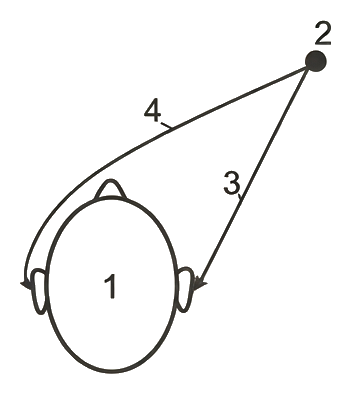
Traditional HRTF
Traditional approach that estimates sound direction but does not render real-world depth and accuracy.
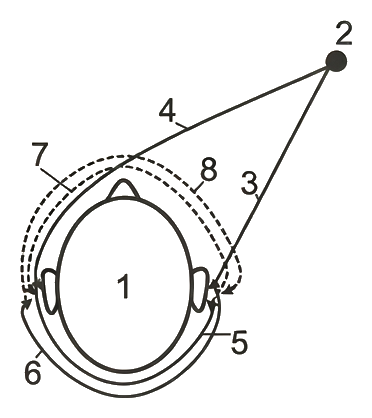
Innit Audio
Innit recreates how sound travels in the real world and creates a much greater, immersive and lifelike audio experience.
WHERE IT'S APPLIED
ONE SIMPLE STEP BEFORE OUTPUT.
Innit sits as the final audio processing step, enhancing any device and any content without requiring upstream coding of source media.
PC SOFTWARE

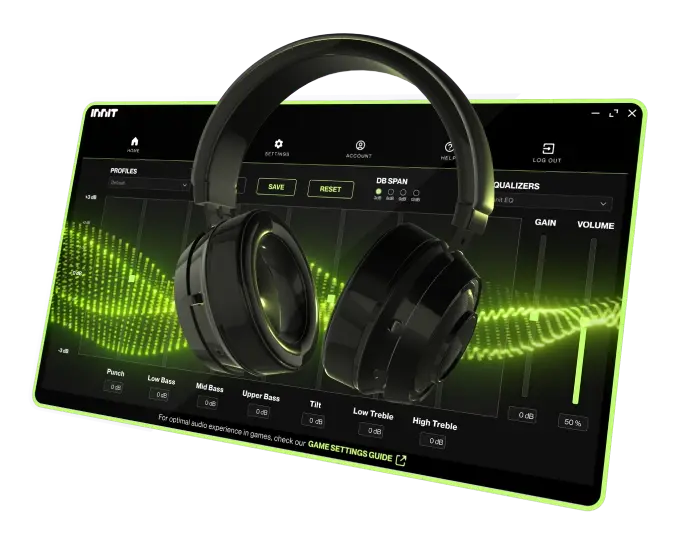
PC software powered by Innit Spatial Engine that transforms audio in any headset or earbuds into a true 360×360 spatial experience.